



Hello, I’m Dr. Shin Dong-woo, the leading surgeon at Planet Plastic Surgery Clinic.
Every day, we receive an inspiring variety of questions through our clinic’s channels, and I genuinely love answering them. However, one highly specific question recently stopped me in my tracks:
“Doctor, in your honest professional opinion—which surgical technique is actually better, a dual plane or a deep plane facelift?”
For those just beginning to research facial rejuvenation, these terms might sound like complex medical jargon. But for those who have been losing sleep trying to choose the right surgical path, this is the ultimate question.
Today, I want to address this debate head-on. I will break down these two pillar facelift techniques as honestly and clearly as possible—without the confusing fluff—so you can understand which approach aligns with your unique facial anatomy.
The Common Foundation: Addressing the SMAS Layer
Before comparing the two techniques, we must establish the core rule of modern facial aging. As we age, it is not just the outer skin that sags; the SMAS (Superficial Muscular Aponeurotic System) layer—the deep foundational framework of muscle and connective tissue beneath your fat pads—loses its elasticity and slides downward under gravity.
To achieve a true, natural rejuvenation, a surgeon must lift both the skin and this deep SMAS layer. The fundamental difference between Deep Plane and Dual Plane is simply how the surgeon chooses to handle and manipulate that deep SMAS layer.
Technique #1: The Deep Plane Facelift (Unified Layer Lifting)
A Deep Plane Facelift treats the surface skin and the underlying SMAS layer as a single, unified unit. Instead of separating the skin from the muscle, the surgeon enters the deep anatomical plane directly beneath the SMAS, lifting both layers together as one cohesive piece.
[Skin + SMAS Layer Combined] ──> Lifted Together as a Single Composite Flap
📌 Key Advantages of Deep Plane:
- Minimal Tissue Trauma: Because the skin is never detached from the underlying muscle layer, the natural blood supply remains entirely intact.
- Faster Recovery: Less separation of tissue layers results in significantly less postoperative swelling, minimal bruising, and a shorter overall downtime.
- Ideal for Structural Revision: This technique is exceptionally well-suited for patients who have substantial internal scarring from multiple previous thread lifts or those undergoing a Revision Facelift where the skin and SMAS are already tightly bound.
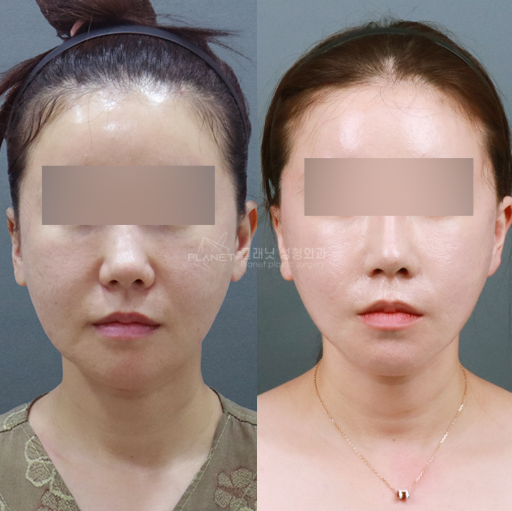
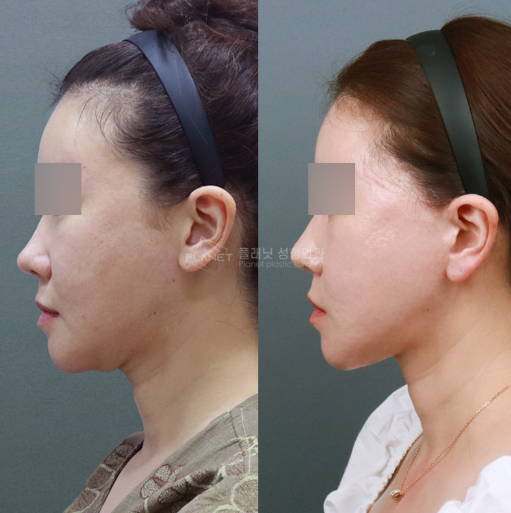
Technique #2: The Dual Plane Facelift (Independent Multi-Vector Lifting)
A Dual Plane Facelift takes a completely different, highly customized approach. Instead of moving the layers together, the surgeon completely separates the surface skin from the deeper SMAS layer, creating two distinct planes of movement.
The clinical power of this technique lies in independent control: the deep SMAS layer and the surface skin can be lifted in completely different directions and at entirely different angles (Multi-Vector Lifting).
[SMAS Layer] ──> Lifted Diagonally / Vertically to Rebuild Muscle Foundation
[Skin Layer] ──> Re-draped Independently at a Customized Vector to Prevent Tension
📌 Key Advantages of Dual Plane:
- Bespoke Structural Sculpting: This independent movement allows for a much higher degree of surgical precision, making it feel like a custom-tailored suit rather than an off-the-rack procedure.
- Prevents Horizontal Widening: If a face with prominent cheekbones or a wider bone structure is pulled uniformly upward and outward, the face can inadvertently appear wider and flatter. With a dual plane approach, the deep tissue can be anchored vertically while the skin is re-draped precisely, resulting in a noticeably slimmer, more defined V-line jawline.
- Tailored to Unique Bone Structures: Allows the surgeon to meticulously calibrate the lifting angles to match your specific facial skeletal frames.
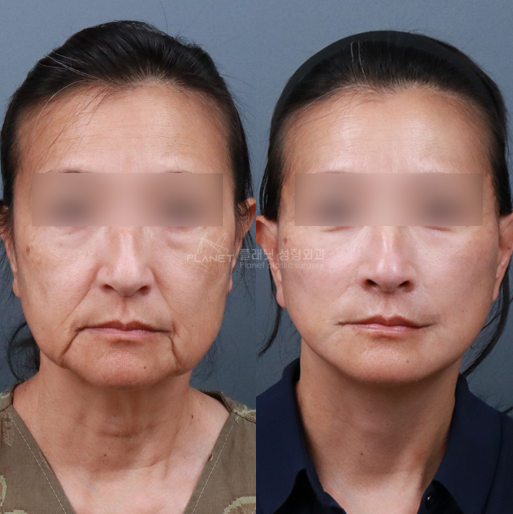
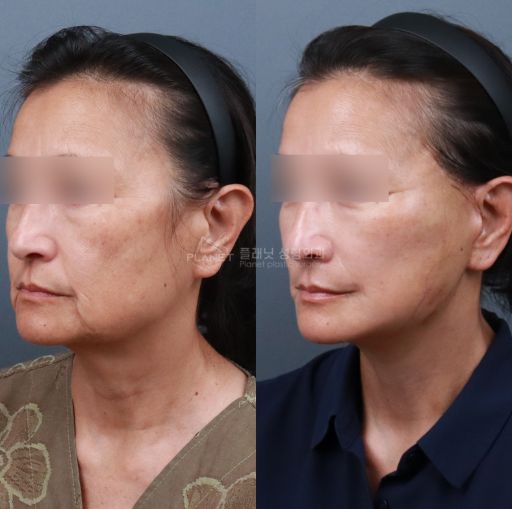
Face-to-Face: Deep Plane vs. Dual Plane Facelift
| Comparison Metric | Deep Plane Facelift | Dual Plane Facelift |
| Layer Manipulation | Skin and SMAS lifted as a single unified unit | Skin and SMAS separated & manipulated independently |
| Lifting Vector | Single, uniform composite vector | Multi-vector (Skin and SMAS lifted at different angles) |
| Best Suited For | Revision cases, history of heavy thread lifts, fast recovery | Prominent cheekbones, wide facial frames, customized sculpting |
| Tissue Disruption | Low (Preserves natural blood supply to skin) | Moderate (Requires meticulous layer separation) |
| Primary Structural Benefit | Efficient structural lift with minimized swelling | Superior ability to slim the lower face and contour jawlines |
Conclusion: The Best Technique is the One Tailored to Your Face
By now, you are likely wondering: “So, which one wins the debate?”
My honest answer as a surgeon is: Neither.
Deep plane and dual plane are not competing rivalries; they are separate, highly specialized tools engineered for different facial topographies. Rather than rigidly committing to a single named technique, the wisest surgical approach is to thoroughly analyze the patient’s individual skin laxity, fat distribution, and underlying bone structure—and then apply or blend the techniques intelligently.
When you schedule a consultation, I encourage you to resist the urge to request a specific named procedure you read about online. Instead, look for a surgeon who takes the time to truly map your unique facial characteristics. The most beautiful, natural-looking results do not come from the most trending technique name; they come from the approach that works most naturally with your unique anatomy.
If you have any lingering questions or want to discover which structural mapping is ideal for your face, please feel free to leave a comment below or visit us at Planet Plastic Surgery Clinic.
Thank you for your time.
Written by Dr. Shin Dong-woo, Leading Surgeon at Planet Plastic Surgery Clinic.
FAQ
A. Generally, yes. Because a Deep Plane Facelift lifts the skin and the SMAS layer together as a single unified piece, it requires less internal separation (dissection) between the skin and muscle. This preserves the natural blood vessels and network connections, resulting in less postoperative swelling, reduced bruising, and a slightly faster initial healing phase compared to procedures where the layers are completely separated.
A. A Dual Plane Facelift is highly preferred when a patient requires precise, multi-vector facial sculpting. Because it separates the skin and the SMAS layer, the surgeon can pull the deep muscular foundation at one angle (e.g., vertically to lift jowls) and re-drape the outer skin at a different angle. This independent control is vital for patients with prominent cheekbones or wider facial frames, as it prevents the face from looking unnaturally wide or flat, ensuring a significantly slimmer lower face contour.
effective option. Multiple thread lifts create dense internal scar tissue and strong adhesions between the skin and the SMAS layer. Trying to separate these scarred layers during a dual plane lift can compromise skin health. The deep plane approach enters the clear anatomical space beneath the SMAS layer, bypassing the scar tissue entirely and lifting the structural unit safely.
A. Absolutely not, provided it is executed by an experienced board-certified specialist. An unnatural, “windblown” look only occurs when a surgeon places excessive tension directly onto the surface skin layer. In a Dual Plane Facelift, 100% of the lifting structural tension is secured tightly to the deep, durable SMAS muscle layer. The separated skin is then laid over the new contour smoothly and trimmed under zero tension, resulting in a beautifully soft, completely natural expression.
A. You cannot accurately determine this based on online articles or generic before-and-after photos. The right choice depends entirely on a physical evaluation of your skin elasticity, the thickness of your soft tissues, residual scarring, and your unique craniofacial bone structure. The best approach is to select a surgeon who specializes in all modern variations of facelifts and can design a customized plan tailored exactly to your unique facial coordinates.