



Hello, I’m Dr. Shin Dong-woo, the leading surgeon at Planet Plastic Surgery Clinic.
When patients sit across from me in my consultation room, they almost always start with the exact same phrase:
“Doctor, the corners of my mouth keep pulling downward, and my mouth wrinkles are getting worse.”
However, when I examine their faces closely under surgical lighting, each person is actually telling a completely different structural story.
For some, it is a deep diagonal crease running from the nose. For others, it is a sad, puppet-like line dropping toward the chin. For others still, it is a heavy, sagging volume that blurs the entire jawline. Describing all of these unique structural shifts simply as “mouth wrinkles” is where the mismatch begins.
The root cause behind each of these changes is entirely different—ranging from bone-deep volume loss to gravity-driven soft tissue descent. Getting the diagnosis wrong means that no matter how much time and money you invest, the mirror will keep delivering disappointment.
Today, I will break down the four distinct types of aging around the mouth and map out the clinical solutions that actually fit your unique facial anatomy.
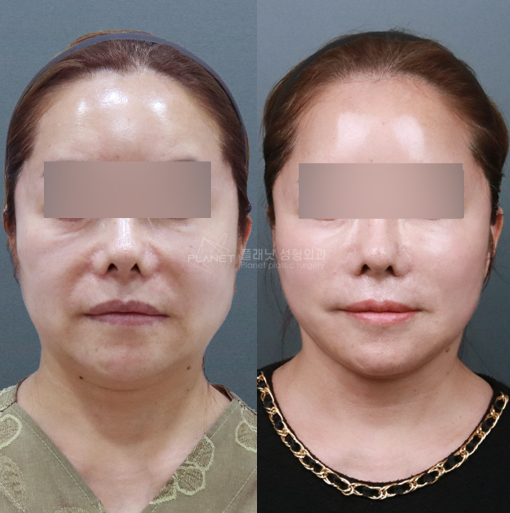
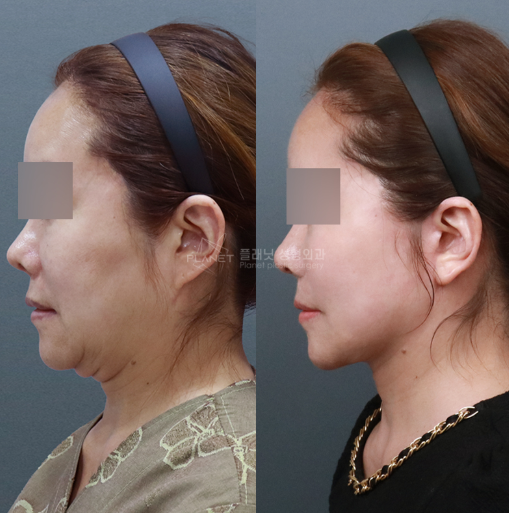
The 4 Distinct Types of Mouth-Area Aging
To treat aging around the mouth effectively, we must first accurately identify the specific culprit. Perioral aging is divided into four distinct anatomical concerns:
1. Smoker's Lines (Fine Lines) ──> Superficial thinning of the skin matrix
2. Nasolabial Folds            ──> Midface fat pads descending diagonally
3. Marionette Lines            ──> Lower mouth support structures collapsing vertically
4. Jowls (Bulldog Cheeks)      ──> Heavy soft tissue dropping past the jawline
1. Fine Lines Around the Lips (Smoker’s Lines)
These are the small, vertical creases that etch directly along the borders of your lips. They develop primarily because the skin in this highly mobile area thins out, loses moisture, and depletes its natural collagen. Patients usually realize they have them when makeup begins to cake and settle into the vertical ridges rather than sitting smoothly.
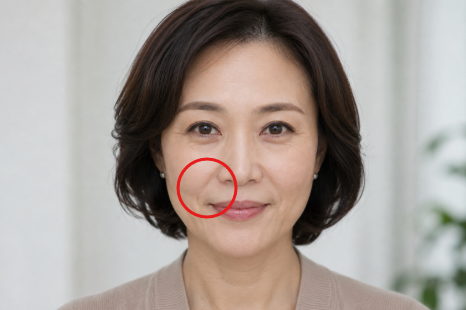
2. The Nasolabial Folds
The classic diagonal creases running from the sides of the nose down to the corners of the mouth. This is typically the very first sign of aging people notice. It forms due to a combination of active facial expressions and upper cheek fat pads losing their structural support and sliding downward and forward.
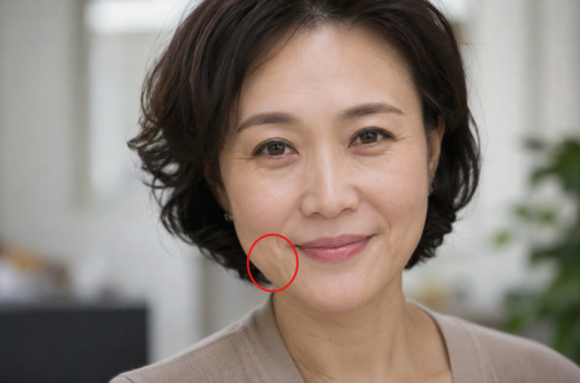
3. Marionette Lines (Puppet Lines)
These are the harsh vertical grooves that drop straight down from the corners of your mouth toward your chin, mimicking the hinged jaw of a puppet. Marionette lines project a constantly tired, sad, or stern expression, occurring as the deep retaining ligaments supporting the lower mouth weaken and sag.
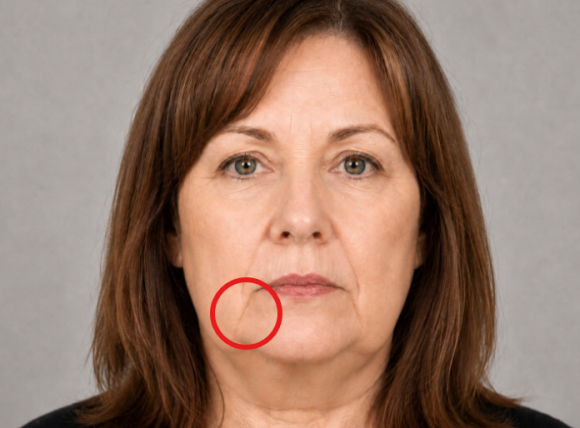
4. Jowls (Bulldog Cheeks)
This is less of a wrinkle and more of a total structural distortion of the lower silhouette. Jowling occurs when the heavy soft tissues of the lower cheeks succumb to gravity, spilling downward and outward past the boundary of the mandible. This completely erases a sharp jawline, making the lower face look thick and aged.
The Solution Matrix: Tailoring Treatments to the Root Cause
Because these four concerns stem from different anatomical layers, a generic treatment approach will fail. Here is how we strategically treat each condition at Planet Clinic:
🌐 For Fine Lines Around the Lips: Focus on Skin Density
Since the root cause is superficial dermal thinning, the goal is to rebuild the skin’s thickness and elasticity from within.
- Clinical Options: Non-ablative fractionated lasers, radiofrequency (RF) microneedling, hydrating Skin Booster injections (such as Juvelook or Rejuran), and micro-doses of botulinum toxin to gently relax the hyperactive puckering muscles around the mouth.
📐 For Nasolabial Folds: Volume vs. Structural Lift
Treatment relies completely on whether the fold is caused by emptiness (hollowing) or weight (sagging).
- If caused by Volume Loss: High-cohesive Dermal Fillers or autologous fat grafting can plump up the hollow space and smooth the crease instantly.
- If caused by Tissue Descent: Injecting fillers will only make the face look heavy and puffy. Instead, a structural lift—such as a Thread Lift or a Mini-Facelift—is required to physically pull the dropped cheek tissue back up to its original position.
🎭 For Marionette Lines: Multi-Layer Intervention
- Early Stages: A combination of a targeted injection to relax the depressor muscles pulling the mouth corners down, paired with a soft filler to camouflage the shadow.
- Moderate Stages: Energy-based tightening devices (HIFU like Ultherapy or Thermage) to tighten the deep fascial layers beneath the surface.
- Advanced Stages: Once a deep physical fold forms, non-surgical options look unnatural. A Surgical Facelift combined with micro-fat grafting to the oral commissure is the only definitive way to turn the mouth corners upward permanently.

🐕 For Jowls: Restoring the Jawline Contour
- Early Stages: Injectable fat-dissolving treatments or localized energy devices to melt excess pocket fat and tighten the surrounding lower cheek envelope.
- Advanced Stages: When the jowls blur seamlessly into the neck, a SMAS Facelift is mandatory. We release the tight retaining ligaments that trap the jowl fat, pull the deep muscle framework vertically upward, and sculpt the jawline. Often, Chin/Jawline Liposuction is performed concurrently to carve a crisp, youthful profile.
At-a-Glance: Mouth Wrinkle Treatment Guide
| Aging Type | Structural Culprit | Non-Surgical Solution | Definitive Surgical Solution |
| Fine Lip Lines | Superficial collagen loss | Skin Boosters, RF Microneedling | Laser Resurfacing |
| Nasolabial Folds | Fat descent or hollowing | Dermal Fillers, Thread Lifts | Deep Plane / Dual Plane Facelift |
| Marionette Lines | Ligament laxity, mouth dropping | Toxin + Filler combo, HIFU | Full Facelift + Fat Grafting |
| Jowls (Bulldog Cheeks) | Advanced lower face sagging | Localized RF tightening | SMAS Facelift + Chin Liposuction |
Conclusion: Stop Chasing Trends; Diagnose the Depth
When managing aging around the lower face, the most critical step is to look beyond trending procedures or viral skincare routines. You must analyze the exact depth of your perioral aging.
If you are tired of temporary treatments that leave you looking puffy rather than lifted, it is a sign that your condition requires a structural, deep-layer intervention rather than a superficial fix.
If you want a precise anatomical breakdown of your mouth-area concerns, please leave a comment below or schedule a personalized diagnostic session at Planet Plastic Surgery Clinic. We are committed to helping you safely rediscover the natural, crisp facial contours you recognize.
Thank you for reading.
Written by Dr. Shin Dong-woo, Leading Surgeon at Planet Plastic Surgery Clinic.
FAQ
A. Fillers are volumizing tools meant to fill empty spaces. If your nasolabial folds or mouth wrinkles are caused by heavy cheek tissue physically sagging downward due to gravity, adding filler on top of that sagged tissue will simply make your lower face look bulky, heavy, and unnaturally puffy. When sagging is the main issue, a structural lifting procedure (like a thread lift or facelift) must be used instead of fillers to lift the root tissue.
A. Marionette lines are caused by the relaxation of the deep retaining ligaments around the chin, combined with the downward descent of midface fat. In the very early stages, they can be softened non-surgically using a combination of botulinum toxin (to relax the muscles pulling the mouth down) and targeted fillers or HIFU devices. However, if the lines are deep and form a visible fold of hanging skin, a structural surgical facelift is required for a smooth result.
A. Heavy jowls occur when the deep SMAS muscle layer slips out of its youthful position and pools above the jawline. A surgical facelift fixes this by going beneath the surface skin to release the bound retaining ligaments. The surgeon then lifts the entire SMAS muscle layer vertically backward, anchors it securely to the stable structures near the ear, and trims away the excess stretched skin. This fundamentally reshapes the lower face matrix, providing a clean jawline that lasts for over a decade.
A. Absolutely. While smoking accelerates these lines by breaking down collagen, these vertical lip lines are primarily a product of repetitive muscle movement (talking, eating, smiling) combined with the natural thinning of the skin that comes with aging. They are highly treatable using collagen-stimulating skin boosters like Juvelook, micro-botox, or resurfacing lasers that stimulate your body to regenerate its own rich dermal matrix.
A. There is no specific chronological age requirement. Some patients in their late 30s require early structural lifting due to rapid weight loss or genetic ligament laxity, while others may only need minor skin boosters well into their 40s. The ideal time to seek treatment is when you notice that non-surgical maintenance treatments are no longer lasting or are altering your natural expressions unfavorably.