


I’ll be honest with you. A revision facelift is a highly difficult surgery, even from an experienced medical professional’s perspective.
Tissues that have already undergone surgery often develop adhesions and scarring, making the natural anatomical layers unclear. Coupled with the patient’s understandably heightened expectations, this is a challenging process.
Nevertheless, my reason for performing revision surgeries is clear. It is because there is a real possibility of turning the disappointment of your first surgery into a success with a second chance. However, this possibility doesn’t come unconditionally. It can only lead to realistic results when accompanied by an accurate assessment of your condition and incredibly careful surgical judgment.
During revision consultations, patients frequently ask me: “Will it really be okay this time?”
This question holds emotions that go far beyond simple curiosity. It carries the heavy disappointment they must have felt looking in the mirror after their first surgery, as well as the anxiety of potentially facing the same outcome again. Because I fully understand those feelings, I believe a much more cautious and meticulous approach is essential.
The Biggest Challenge of a Revision Facelift: Altered Tissue
The most significant hurdle remaining after an initial surgery is “altered tissue.” In a normal facial structure, the SMAS (muscle) layer, fat layer, and skin layer are relatively distinct. During a primary surgery, these layers separate easily, allowing for a natural lift when each is precisely dissected and pulled.
However, tissues that have already been operated on present a completely different scenario. Due to adhesions and scarring formed during the healing process, these layers are often fused together. Fibrous tissue, created as the wound heals, fills the spaces between the layers and alters the internal facial structure.
Navigating Scar Tissue and Facial Nerves
Having performed revision surgeries for 19 years, the moment I find most challenging is when the fascial and skin layers are stuck together, obscuring the SMAS layer.
Scar tissue is often harder than normal tissue, and its blood vessel distribution is highly irregular. Attempting to force dissection in this state severely increases the risk of damaging the facial nerves or blood vessels. Conversely, if the surgical approach is too shallow, it is impossible to achieve a sufficient lifting effect.
According to recent medical reports, the risk of facial nerve damage during a revision surgery is known to be more than twice as high compared to an initial surgery. This is not merely a matter of surgical technique, but a fundamental risk factor stemming from the altered anatomical structure.
Therefore, in revision surgery, a surgeon must master not only “what to touch” but also precisely “what to leave alone.”
The Core Issue: 3 Reasons Why Your First Facelift Failed
“I don’t understand why my first surgery wasn’t satisfactory.” A successful revision starts with accurately identifying the problems of the first procedure. Cases requiring a revision facelift can largely be divided into three categories:
1. Undercorrection (Lack of Improvement)
This is common when tissue damage has accumulated from previous “mini-lifts” or thread lifts, or when sagging has prematurely reappeared after a standard facelift.
- Mini-lifts have a limited range of dissection, making it difficult to achieve sufficient improvement in the cheekbone or nasolabial fold areas.
- Thread lifts can melt or shift over time, leaving irregular adhesions in the tissues.
In these situations, a revision surgery requires a much deeper dissection to accurately separate the SMAS layer and perform the lift anew from a structurally stable foundation.
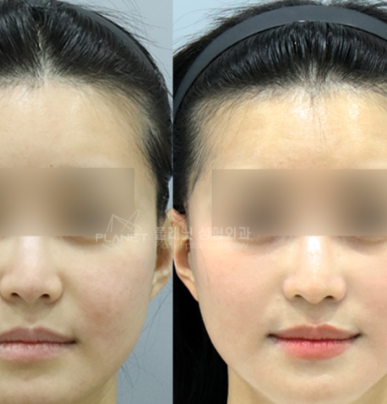
2. Visible Scarring
This applies when noticeable, raised marks are left on the incision sites in front of or behind the ears. In these cases, the surgeon must carefully excise and refine the existing scar tissue while simultaneously performing the new lift to ensure a cleaner, hidden incision line.
3. Ear Deformity (Pixie Ear)
There are cases where the shape of the ear has been altered, resulting in the so-called “pixie ear” deformity. Because skin naturally tries to return to its original state, excessive tension or pulling during the first surgery can drag the earlobe downward, distorting its shape. In such cases, it is critical to reshape the earlobe and establish new, secure upper fixation points to recreate a natural ear contour.
Will a Revision Surgery Guarantee Better Results?
To the question, “Will it unconditionally get better if I have a revision surgery?” I must answer cautiously.
If there is severe tissue damage or a catastrophic loss of skin elasticity, there may be limits even to a revision procedure.
However, one thing is clear: if the most appropriate surgical method is applied based on a precise diagnosis and a thorough analysis of your previous surgical history, the vast majority of cases lead to beautiful results that closely match patient expectations.
A revision is not merely the concept of undergoing surgery one more time. It is a complex process of finding new possibilities within altered tissue, and a precious opportunity to improve upon past disappointments.
To make this opportunity meaningful, your choice of surgeon is paramount. I strongly recommend consulting with a medical team that has extensive experience specifically in revision surgeries—doctors who don’t just tell you “yes, it’s possible,” but who can explain in detail exactly how much improvement can be made and what caused the initial failure in the first place.
FAQ
A. The primary challenge in a revision facelift is dealing with “altered tissue.” During your first surgery, adhesions and scar tissue form as you heal, which often causes the distinct anatomical layers of the face (like the SMAS, fat, and skin) to fuse together. This makes separating the layers much more complex and requires a highly experienced surgeon to navigate safely.
A. Yes, because the internal structure of the face has changed, the risk of facial nerve damage during a revision surgery is reported to be more than twice as high as in an initial surgery. This is why it is critical to choose a surgeon who thoroughly understands the altered anatomy and knows exactly where to dissect and, equally important, what areas to leave alone.
A. Most revision cases fall into three categories:
Undercorrection: The first surgery (often a mini-lift or thread lift) did not lift the tissues deeply or thoroughly enough, causing sagging to quickly return.
Visible Scarring: Raised, noticeable scars were left around the ears.
Ear Deformity: Excessive pulling during the first surgery distorted the earlobes, resulting in what is commonly known as “pixie ears.”
A. Yes. Pixie ears occur when too much tension is placed on the skin during the initial lift, causing the earlobe to be dragged downward as the skin tries to return to its original position. During a revision, we can carefully release this tension, reshape the earlobe, and create new, secure upper fixation points to restore a natural ear contour.
A. We always give an honest assessment: if your previous surgery caused severe tissue damage or a catastrophic loss of skin elasticity, there may be limits to what a revision can achieve. However, in the vast majority of cases, a thorough analysis of your surgical history paired with the correct surgical approach will lead to beautiful, natural results that closely align with your expectations.