



Hello, I’m Dr. Shin Dong-woo, the leading surgeon at Planet Plastic Surgery Clinic.
During consultations, patients often ask me: “Doctor, with such a demanding surgery schedule, how do you find the time to consistently write these articles?”
The answer is simple. When I hear the exact same anxieties, frustrations, and questions repeated by patient after patient in my consultation room, I feel a profound medical responsibility to share those insights more broadly. My goal is to transform face-to-face clinical conversations into an accessible, educational resource. If even one individual avoids a poorly informed choice because of my words, my time is well spent.
Today, I want to address the ultimate turning point in facial rejuvenation: How do you know when it is truly the right time to consider a surgical facelift, and what can you realistically expect from the results?
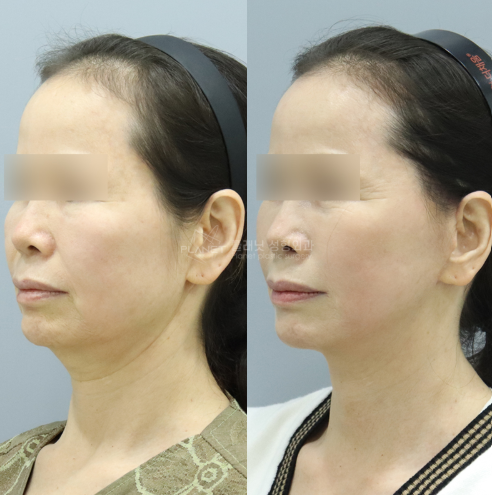
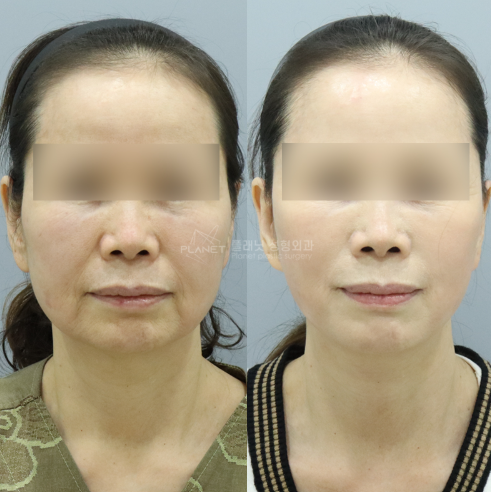
3 Definitive Signs That the Timing for a Facelift is Right
Facial aging presents uniquely in every individual, but there is a clear, predictable anatomical pattern that signals when surface maintenance is no longer enough. If you match the three markers below, your aging has progressed from skin-deep laxity to deep structural descent.
[Sign 1: Blurred Mandibular Boundary] ──> Tissue slips past the jawbone, creating jowls
[Sign 2: Midface Structural Weight]  ──> Cheek fat pads drop, carving deep mouth folds
[Sign 3: Non-Surgical Ceiling]       ──> Lasers and thread lifts lose traction and longevity
📐 Sign #1: The Disappearing Jaw-to-Neck Boundary
In youth, the jawline and the neck maintain a sharp, visually distinct geometric boundary. As soft tissues and the deep SMAS layer lose their structural grip, they cascade downward, pooling over the mandibular bone. If your weight has remained completely stable, yet your lower face looks progressively wider, heavier, and less defined in photographs, significant structural sagging is already underway.
🎭 Sign #2: The Gravity-Driven Midface Collapse
When the underlying structural frameworks give way, the cheek fat compartments slide downward under the relentless pull of gravity. This shifts the visual weight of your face to the lower third, creating an appearance of chronic fatigue or sternness. Simultaneously, this tissue descent forces the skin to fold, deepening the nasolabial creases and creating sad, puppet-like marionette lines around the lips.
⏳ Sign #3: Reaching the “Non-Surgical Ceiling”
Premium thread lifts and high-intensity lasers (such as Ultherapy) deliver excellent satisfaction during the early stages of aging. However, if you notice that your thread lift results are now lasting only a few months, or that repetitive laser sessions no longer yield visible tightening, your anatomy is sending a clear signal: the condition has surpassed the limits of non-surgical care.
What Can You Realistically Expect from a Masterful Facelift?
A premier surgical facelift is never about pulling an isolated wrinkle or stretching a single feature. Because it physically restores dropped internal scaffolding back to its original coordinate, the clinical improvements are beautifully interconnected.
- A Sculpted, Slimmer Jawline: The heavy, blurred contour is completely resolved. The structural lift re-carves a crisp, razor-sharp boundary between your jaw and neck, returning a refined, youthful V-line silhouette to the lower face.
- Eradication of Jowl Protrusion: The sagged soft tissues (commonly known as bulldog cheeks) that accumulated along the sides of the mouth are lifted vertically, smoothing out the lower facial line seamlessly.
- Natural Softening of Deep Creases: By lifting the heavy fat pads that were physically compressing and folding the skin, the mechanical force creating the deep lines is eliminated, allowing folds to fade naturally.
- A Rejuvenated Mood, Not an Altered Look: The ultimate goal of a modern Deep SMAS Facelift is to ensure you look entirely like yourself—just a vital, refreshed version from a decade prior. Your expressions remain soft, moving naturally without a tight, “windblown,” or artificial appearance.
Note: A facelift specifically targets aging caused by tissue descent. If your concern also involves empty hollowing due to facial volume loss, pairing the lift with autologous micro-fat grafting will be recommended.
At-a-Glance: Am I Ready for a Facelift?
| Clinical Assessment Point | Non-Surgical Maintenance Stage | Surgical Facelift Stage |
| Jawline Definition | Minor skin softness; jawline still distinct | Heavy jowls; jawline blends seamlessly into the neck |
| Midface Dynamics | Early fine lines; cheeks retain youthful height | Cheeks dropped downward; deep mouth shadows |
| Treatment Response | Lasers/Threads hold beautifully for 1+ years | Thread lift results fade within a few short months |
| Anatomical Root Cause | Superficial dermal collagen depletion | SMAS layer laxity and stretched retaining ligaments |
Conclusion: Value Real Diagnostics Over Trends
Deciding to undergo facial rejuvenation should never be based on viral internet trends or what worked for someone else. It requires an honest look in the mirror and a precise, anatomical assessment of your deep tissue layers.
If you find yourself feeling increasingly frustrated by the short-lived results of non-surgical maintenance, your face is telling you that it is time to address the root foundation underneath.
If you are ready to step away from the cycle of temporary fixes and want a definitive evaluation of your current aging stage, I invite you to visit us. Please feel free to leave a comment below or connect with Planet Plastic Surgery Clinic directly. We are always here to provide the clarity you need to move forward with confidence.
Thank you for your time and trust.
Written by Dr. Shin Dong-woo, Leading Surgeon at Planet Plastic Surgery Clinic.
FAQ
A. It comes down to retention longevity and skin excess. If your previous thread lift results lasted for a year or more, your tissue laxity is likely still manageable non-surgically. However, if the threads lose traction within a few months, or if you have visible folds of loose, hanging skin that need to be physically excised, threads will fail. A facelift is required to permanently lift the deep muscle framework and remove the excess skin.
A. There is no magic number. Surgical candidacy is determined strictly by anatomical tissue descent, not your birth certificate. While the majority of full facelift patients are in their late 40s to 60s, younger individuals who have experienced massive weight loss (such as “Wegovy Face”) or premature genetic ligament laxity frequently undergo the procedure with highly successful, natural results.
A. A facelift is primarily a structural lifting tool designed to relocate sagged tissues vertically; it is not a volume creator. While it shifts dropped cheek tissue back up to soften shadows, it cannot completely fix deep bone-deep hollowing. For an optimal result, an expert surgeon will often combine the facelift with autologous micro-fat grafting during the same session to restore youthful fullness to hollow temples or under-eye zones.
A. An unnatural, windblown appearance is caused by a low-cost, superficial technique where the outer skin layer is pulled too tightly horizontally. At Planet Clinic, we utilize a Deep SMAS Lift protocol. We place 100% of the structural tension on the sturdy deep muscle layers underneath. Once the foundation is securely anchored, the skin is simply laid over the top smoothly and closed under zero tension, ensuring soft, natural expressions.
A. Continuing maintenance lasers (like Ultherapy or Thermage) is excellent for surface collagen, but it will not halt the structural descent of your deep ligaments. Delaying surgery does not cause harm, but as skin elasticity naturally declines further with advanced age, the surgical plan later in life may require a more extensive dissection or a neck lift to achieve the same crisp jawline contour that a simpler lift could have accomplished earlier.