



Hello, I’m Dr. Shin Dong-woo, the leading surgeon at Planet Plastic Surgery Clinic.
Few moments in your anti-aging journey feel as discouraging or emotionally heavy as realizing you may need to consider a Facelift Revision. The second time around, the anatomical stakes are much higher, and it is entirely natural to feel overwhelmed by anxiety and uncertainty.
Because I deeply understand the weight of this decision, I want to walk you through the essential realities of revision surgery: why it becomes medically necessary, whether there is a literal limit to how many times it can be performed, and exactly how to identify a revision specialist you can safely trust.
1. The Three Primary Triggers for a Facelift Revision
Patients who visit Planet Clinic seeking a secondary facelift generally fall into one of three distinct categories. Identifying your primary trigger is the first step toward tailoring a corrective surgical strategy.
⏳ Category A: The Natural Passage of Time (Normal Aging)
A primary facelift effectively sets back the biological clock, but it cannot stop time from ticking. While a premium structural lift holds beautifully for approximately 10 to 15 years, the natural aging process inevitably continues. Over a decade later, the residual skin and muscle layers will gradually yield to gravity again, leading patients to seek a secondary refresh.
📉 Category B: Relapse Due to Under-Corrected Primary Surgery
Achieving longevity requires releasing tight retaining ligaments and shifting the deep SMAS layer. If a previous clinic performed an overly conservative procedure—such as a superficial skin-only lift or an inadequate mini-lift on a face that required a full structural mobilization—the results can relapse within months. This leaves patients feeling as though their initial investment did not pay off.
⚠️ Category C: Structural Deformities and Visible Scarring
The most painful trigger occurs when the primary surgery leaves behind physical distortions. The most common technical complications include:
- “Pixie Ear” Deformity: When the skin is pulled too tight horizontally, it drags the earlobe downward, stretching it into an unnatural, elongated shape.
- Widened, Highly Visible Scars: Caused by high tension on the epidermal closure.
- Facial Asymmetry or “Windblown” Tightness: Caused by pulling the tissue at incorrect, unnatural vectors.
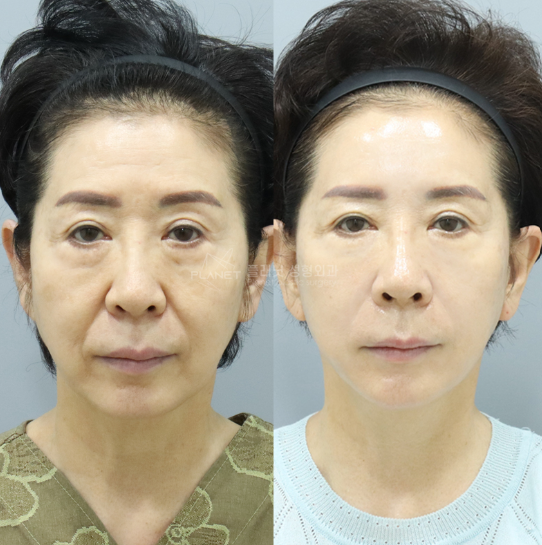
2. The Golden Question: How Many Facelifts Can You Have?
“How many times can I realistically go through this procedure in my lifetime?”
This is one of the most common questions I hear. The honest clinical answer is: there is no fixed numerical limit. However, there are strict biological parameters dictated by your tissue health.
[1st Facelift] Typically in 40s/50s ──> [2nd Facelift] Typically in 60s/70s
- The Standard Lifetime Pattern: For most individuals, undergoing a facelift twice in a lifetime is perfectly sufficient to maintain an exceptionally refreshed, graceful appearance into advanced age.
- The Exceptions: Patients who have experienced severe premature sagging due to massive weight loss (such as modern diet medication drops) or those experiencing tissue laxity accelerated by prior facial bone contouring surgeries may occasionally require a third intervention later in life.
Rather than fixating on a number, a revision specialist evaluates tissue viability: how much flexible skin remains, the current thickness of your SMAS layer, and the severity of deep internal scarring.
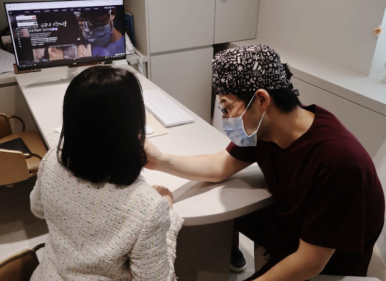
3. The Surgical Secret to an Effective Revision
A revision facelift is inherently steeper and far more complex than a primary case. Once a face has been operated on, the natural anatomical planes are obliterated. Healthy tissues become heavily tangled with dense scar tissue, fibrotic adhesions, and altered blood vessel patterns.
To achieve a successful revision, your surgeon must execute a Deep Scar Release Protocol:
[Surgical Subcision of Old Scar Tissue] ──> [Wide, Clear Re-dissection] ──> [New Vertical SMAS Vector Fixation]
If a surgeon lazily works within the existing scarred boundaries without fully releasing the internal adhesions, they cannot mobilize the deep tissues. True, natural restoration requires a master-level surgeon who can confidently look beyond the existing scar tissue, open a wider and cleaner pathway underneath, and re-anchor the foundation without applying tension to the outer skin.
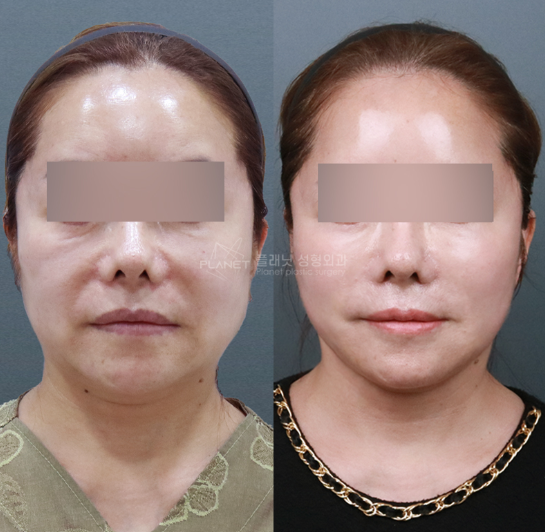
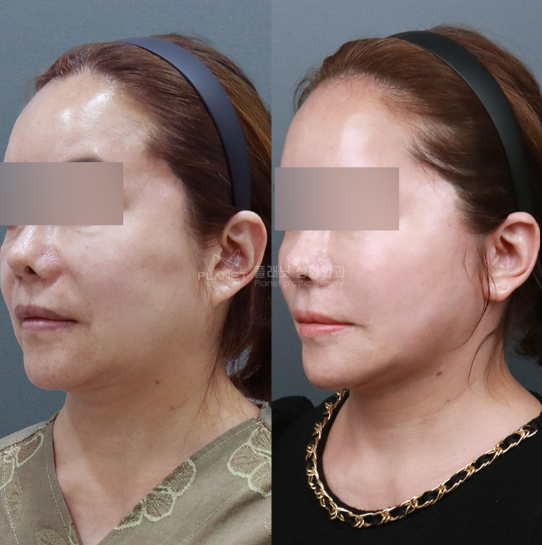
At-a-Glance: Primary Facelift vs. Revision Facelift
| Comparison Factor | Primary Facelift Surgery | Revision Facelift Surgery |
| Anatomical Environment | Clear, predictable tissue layers; no scarring | Dense fibrotic adhesions, tangled scar tissues |
| Surgical Goal | Reposition naturally sagged tissues | Correct distortions (Pixie ears, wide scars) + Restore lift |
| Surgical Complexity | Standard advanced complexity | Extreme complexity (Requires nerve-mapping awareness) |
| Incision Management | Placed along natural ear borders | Must navigate, excise, or camouflage previous bad scarring |
| Surgeon Requirement | Experienced Board-Certified Plastic Surgeon | Specialized Facelift Revision Expert with complex case history |
Conclusion: Take Your Time and Choose Confidence
If you are standing in front of the mirror hoping for a second chance to look and feel like yourself again, please resist the urge to rush into a quick fix.
When interviewing potential surgeons for a revision case, pay absolute attention to two things: their precise understanding of your previous surgical failure, and the transparency of their strategy to bypass your current internal scar tissue.
Because mapping internal distortion and scar density requires a hands-on tactile evaluation, a physical, in-person examination is the only safe way to design a definitive roadmap for your face.
If you are ready to explore your options safely and confidently, please leave a comment below or schedule a private diagnostic session at Planet Plastic Surgery Clinic. We are here to help you reclaim the natural confidence you deserve.
Thank you for your time.
Written by Dr. Shin Dong-woo, Leading Surgeon at Planet Plastic Surgery Clinic.