



Something has shifted in my consultation room over the past few years.
Patients in their 50s and 60s used to come to me with one goal: to look younger. Aesthetic renewal, straightforwardly stated.
That is no longer the whole story. More and more, the people I see in this age group arrive with a specific chapter of life in mind — returning to work after years away, launching a business, stepping back into social circles they had drifted from. I’ve sat with patients preparing profile photos for job applications. I’ve talked with people about to start positions alongside colleagues decades younger.
The details differ every time. The underlying sentence is almost always the same: I want to look like the person I still feel like inside.
Below, I’ll walk through both halves of what a facelift can offer — the structural changes you can see, and the quieter changes that are harder to photograph but just as real.
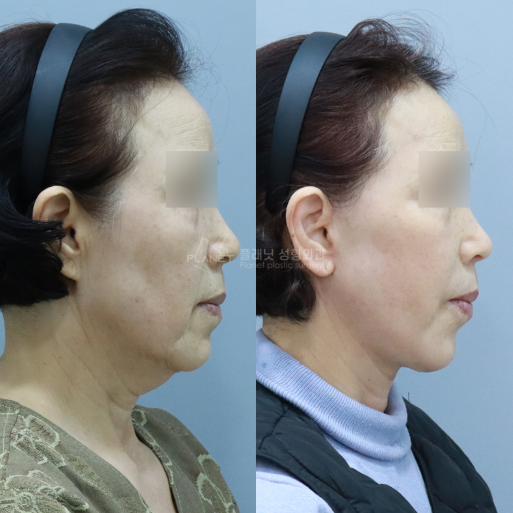
What a facelift changes structurally
Why the lower face loses its outline
Facial aging isn’t only a surface phenomenon. Two things happen at once:
- Skin loses elasticity. Collagen and elastin decline, and skin no longer retracts against the tissue underneath it.
- Soft tissue descends. The fat compartments and the SMAS layer — the fibrous sheet beneath the skin — drift downward under gravity.
The visible result is a blurring of the boundary between the cheek and the jawline. The face reads as wider and heavier through the lower third. Nasolabial folds deepen, and the corners of the mouth drift down, which is why so many patients tell me they look tired or unhappy in photographs regardless of how they actually feel that day.
What the surgery corrects
A facelift addresses the cause rather than the symptom. Descended soft tissue is repositioned to where it originally sat, the supporting layer is re-secured, and only the skin that has genuinely become excess is removed.
The distinction matters: pulling skin tight without addressing the deeper layer is what produces the drawn, wind-swept look people rightly worry about. Repositioning the underlying structure is what restores a contour that looks three-dimensional — and looks like you.
One patient described her main concern as her cheek and jawline having merged into a single indistinct line. What she noticed afterward wasn’t smoother skin; it was that her jawline had a shape again.
That is the honest description of what this operation does. It doesn’t erase every surface wrinkle. It restores anatomical structure and balance that time has rearranged.
Getting there depends on an accurate reading of how a particular face has descended — the pattern is different in every patient — and a plan built specifically around that.
The change that doesn’t show up in photographs
There’s a second dimension I find myself thinking about more with each passing year.
When someone re-enters the workforce or an unfamiliar social environment in their 50s or 60s, they often notice a gap: the reflection in the mirror no longer matches how capable and energetic they feel. Self-consciousness follows. A reluctance to make eye contact, to speak up, to fully occupy the room.
I don’t consider this vanity. For most people, appearance and self-assurance are genuinely intertwined, and discomfort with what you see in the mirror has a way of quietly spilling into how you carry yourself.
Patients frequently describe the shift afterward in social rather than cosmetic terms — feeling more at ease among people, noticing that a certain guardedness has lifted. When your reflection matches the person inside it, what changes first is not how others see you. It’s how you see yourself.
For anyone standing at the threshold of a new chapter, that internal lift can matter as much as anything visible on the surface.
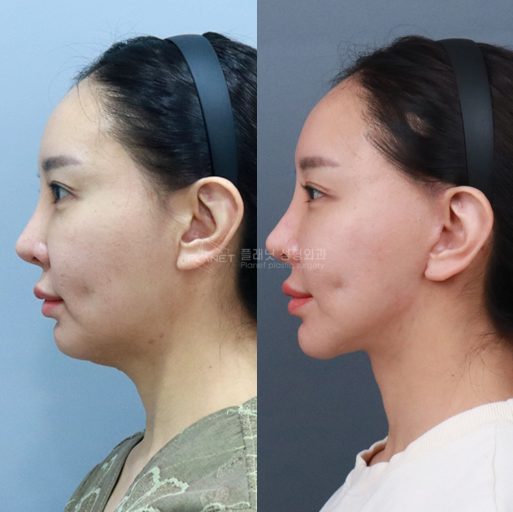
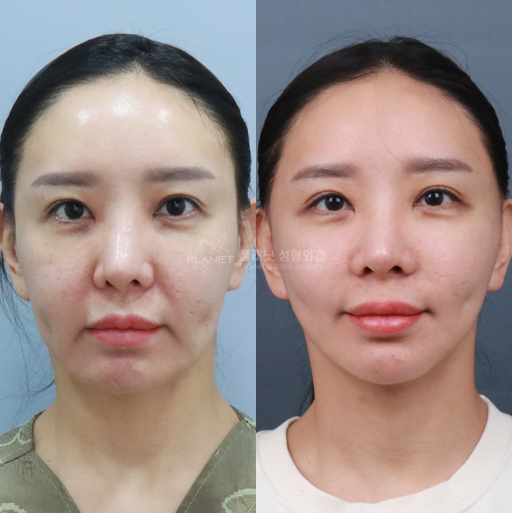
Who is a good candidate?
A facelift tends to suit patients who:
- have noticeable descent of the cheeks, jawline, or neck rather than surface wrinkling alone
- have reasonably good skin quality and a stable body weight
- are in good general health, with any blood pressure or blood sugar conditions well controlled
- do not smoke, or are willing to stop several weeks before and after surgery
- have clear, realistic expectations about what surgery can and cannot change
If the primary concern is fine lines, pigmentation, or overall skin texture, non-surgical treatments will often serve better. A consultation should tell you which category you fall into — including when the answer is “not yet.”
Recovery: a realistic timeline
Individual recovery varies with technique, extent of surgery, and personal healing. As a general guide:
| Stage | What to expect |
|---|---|
| Days 1–3 | Swelling and bruising peak; compression dressing worn |
| Days 7–10 | Sutures removed; bruising begins to fade noticeably |
| Weeks 2–3 | Most patients feel comfortable in ordinary social settings |
| Weeks 4–6 | Return to exercise, typically with a surgeon’s clearance |
| Months 3–6 | Residual swelling resolves; the final contour settles |
Scars are placed along the hairline and the natural creases in front of and behind the ear, where they fade over several months and are readily concealed.
FAQ
A facelift repositions tissue but doesn’t stop aging. Most patients maintain a meaningful improvement for roughly 7–10 years, and generally continue to look younger than they otherwise would have.
That appearance comes from tightening skin alone. Techniques that reposition the deeper supporting layer avoid the tension on the skin that creates it.
Non-surgical treatments can improve mild laxity and skin quality, and are a reasonable starting point for many people in their 40s. They cannot reposition tissue that has structurally descended.
Desk-based work is usually manageable at around two weeks, depending on how visible any residual bruising is and how comfortable you feel.
Most patients report tightness and pressure rather than sharp pain, controlled with oral medication in the first several days.
A final thought
I don’t think of facelift surgery as something people undergo to look younger for anyone else’s benefit.
I think of it as restoring the version of yourself that time has gradually rearranged — bringing the outside closer to how you still feel inside, and recovering a sense of presence that may have quietly faded along the way.
For those standing at a turning point, I hope this can be more than a surgical correction. I hope it’s the start of a chapter you enter fully and without reservation.
Thank you for reading to the end.
Ready to talk it through? A consultation includes an assessment of your individual pattern of tissue descent and an honest conversation about whether surgery — or something less invasive — is the right step. [Book a consultation →]
Dr. Shin Dong-woo is a plastic surgeon at Planet Plastic Surgery Clinic, specializing in facial contouring and facelift surgery.
This article is for general information and does not constitute medical advice. Outcomes vary between individuals, and every surgical procedure carries risks and possible complications, which should be discussed in person with a qualified surgeon.